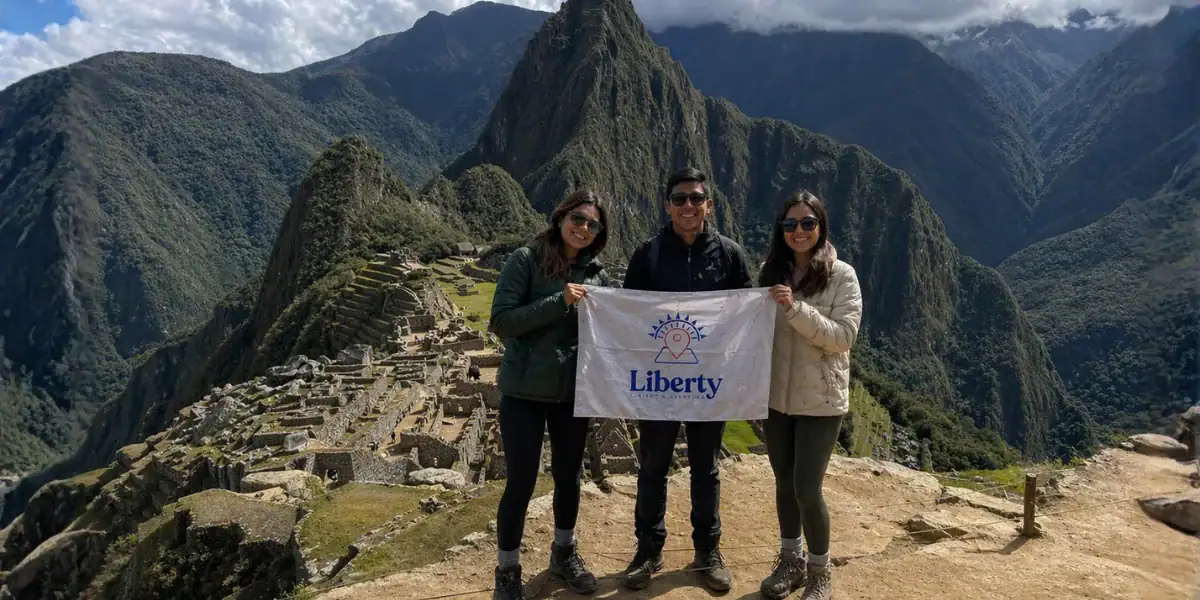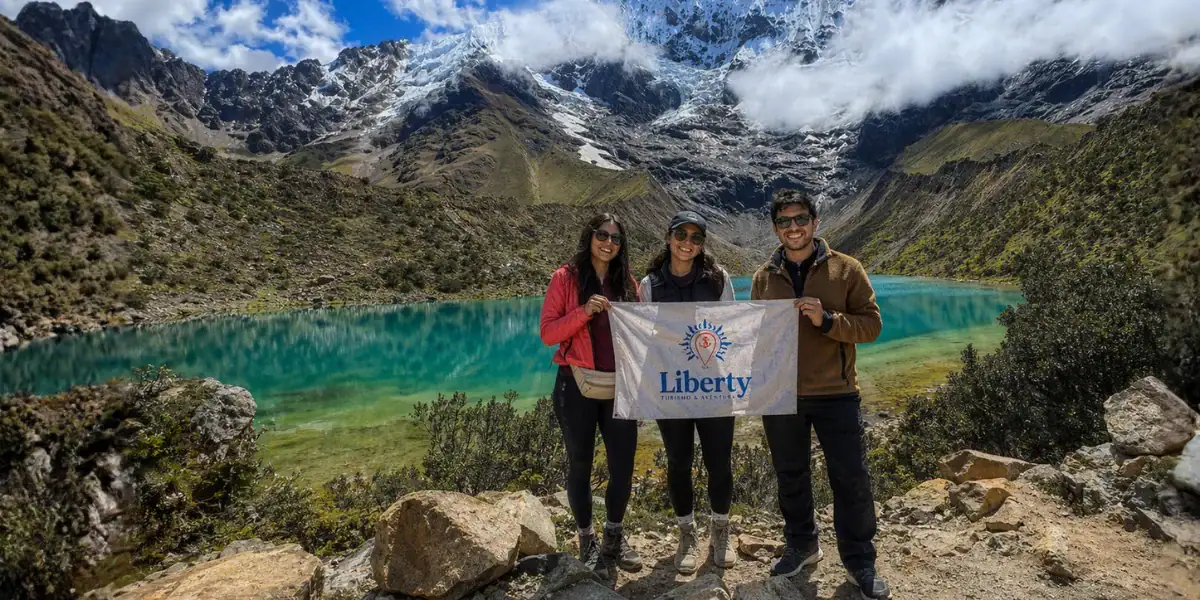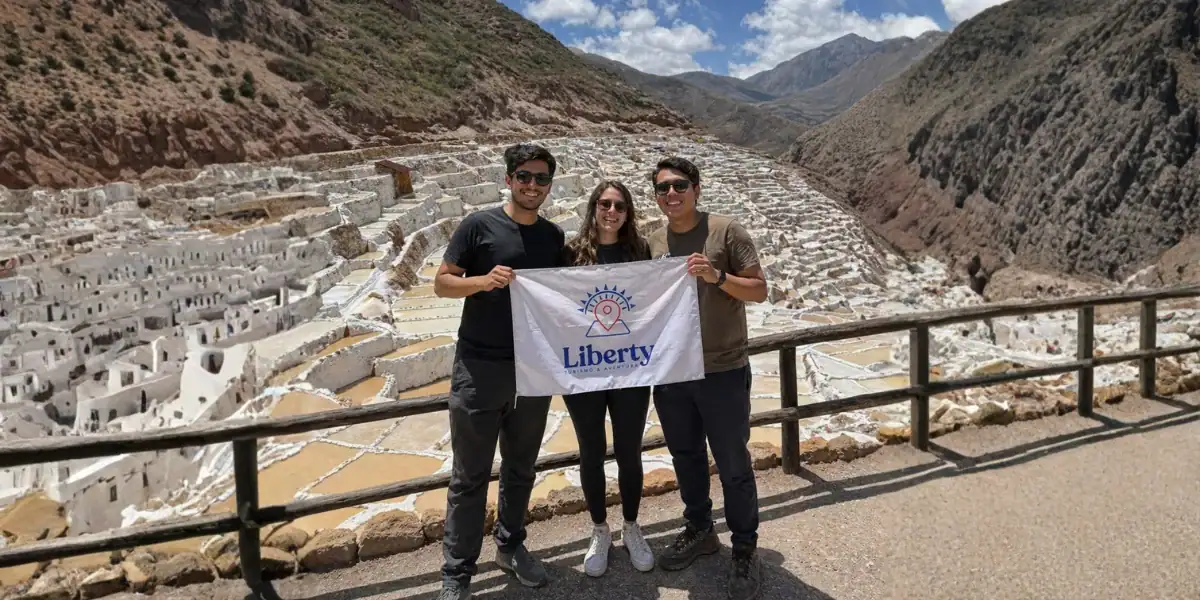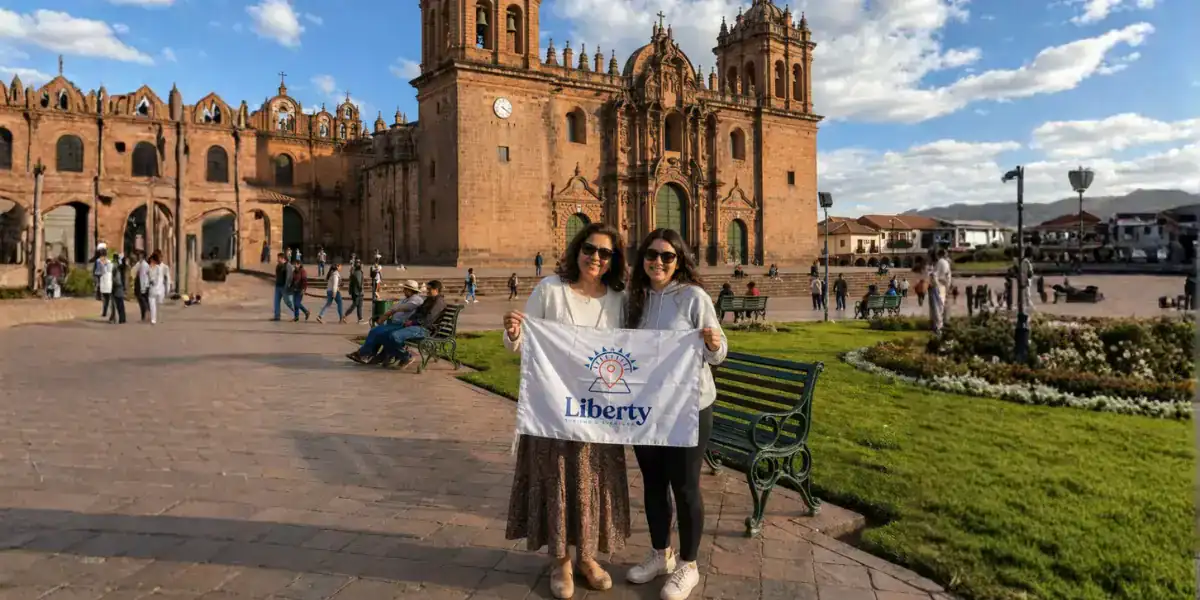
Knowing what to eat in Cusco before you arrive can make or break your first days in the Inca capital. Most travelers plan their archaeological sites carefully — but nobody tells them what to order at 11,200 ft (3,400 m) on day one with altitude sickness, where to find guinea pig without paying tourist markup, or that chiriuchu, Cusco’s signature platter, was declared Cultural Heritage in 2024. The guides at Turismo Liberty in Cusco know both the Qorikancha and the best local picanterías — and that combination is what makes the difference. To plan your visit, message us on WhatsApp +51 959 175 901 — we confirm in under 5 minutes.
This guide covers the 12 dishes no visitor should miss in Cusco in 2026: what they are, where to find them by name and address, real prices in USD and soles — and the answer to what no other food guide in Cusco gives you: what to eat based on which day you’ve arrived, because at altitude, your body needs a strategy.
🗺️ Cusco tour: what’s included, departure point and price
Before going dish by dish, one practical detail changes how you plan your culinary experience in Cusco: Turismo Liberty tours include real food orientation. Guides recommend where to have lunch after the circuit, how to order at picanterías without paying tourist prices, and which dishes make sense depending on how many days you’ve been at altitude.
| Detail | Info |
|---|---|
| Tour | Cusco City Tour — Qorikancha, Sacsayhuamán, Qenqo, Puca Pucara, Tambomachay |
| Price | Ask for current pricing via WhatsApp |
| Duration | Half day — departure 8:30 AM, return ~1:00 PM near Plaza de Armas |
| Pickup | Hotel pickup in Cusco’s historic center |
| Included | Certified bilingual guide, tourist transport, full assistance |
| Not included | Lunch, site entrance tickets, tips |
| Difficulty | Easy — suitable for all ages (short walks on uneven terrain) |
🌅 What to eat in Cusco on your first day at altitude
This is the gap no other article on Cusco food resolves: what to eat based on the day you arrive. Cusco sits at 11,200 ft (3,400 m) and digestion is significantly slower at altitude. Having a full roasted guinea pig or a lechón platter on day one is the fastest way to ruin your first 24 hours.
- Day 1 — arrive and take it easy: Coca tea as soon as you reach your hotel. Lunch: quinoa soup, fava bean stew (kapchi) or chicken broth. Nothing heavy. If you’re hungry at night, choclo con queso (giant corn with fresh cheese) or a light soup. No alcohol.
- Day 2 — your body is responding: Breakfast can be chicharrón cusqueño at San Pedro Market. For lunch, try adobo or lechón. Guinea pig (cuy al horno) is also fine — ask for a small portion if it’s your first time.
- Day 3 onwards: Fully acclimatized. This is the moment for a full chiriuchu platter, pachamanca in the Sacred Valley, or a whole guinea pig in Tipón. Your body can now handle the richness of traditional Andean cooking without any problem.
🍽️ Chiriuchu: Cusco’s signature dish declared Cultural Heritage in 2024
Chiriuchu — which means “cold pepper” in Quechua — is the most emblematic dish of Cusco cuisine. It has over 500 years of history: it was born in Tahuantinsuyo ceremonies, survived the Spanish colonial period, and in July 2024 the Andean Parliament declared it Cultural Heritage of the region. What makes it unique is that it brings together all three ecological zones of Peru in a single dish: from the coast, cochayuyo (dried seaweed) and fish roe; from the highlands, roasted guinea pig, charqui (dried meat), queso paria and toasted corn; from the jungle, fresh rocoto pepper.
Chiriuchu is served cold — that’s its most paradoxical feature, and what surprises first-time diners most. The 11 ingredients are arranged on a large plate without mixing: the idea is to taste each element separately to discover how the flavors change. In June, during Corpus Christi, hundreds of chiriucheras (chiriuchu vendors) set up stalls around Plaza San Francisco — that is the peak moment to eat it. Year-round, it’s available at San Pedro Market and restaurants like Chicha por Gastón Acurio (Plaza Regocijo 261) and Pachapapa (Plazoleta San Blas).
Typical price: $7–11 USD at picanterías and market stalls. $14–22 USD at upscale restaurants. During the Corpus Christi festival: $7–11 USD at the Plaza San Francisco stalls.
🥩 Guinea pig, lechón & Andean meats: the classics of Imperial cuisine
Cuy al horno (roasted guinea pig) is Cusco’s most photographed dish and the one that surprises first-time visitors most — it’s served whole, legs and head intact, with golden crispy skin. What few visitors know is that for centuries it was a ceremonial food, reserved for weddings, baptisms and ritual feasts. The traditional marinade uses garlic, huacatay (an intensely aromatic Andean herb), salt, cumin and chicha de jora — and it’s slow-roasted in a clay or adobe oven for 40–60 minutes until the skin is crackling and the meat firm and flavorful. Served with native Andean potatoes, a fresh salad and sometimes stuffed rocoto pepper.
The best cuy al horno in the region is not in the historic center — it’s in Tipón, 45 minutes from Plaza de Armas. Tipón is famous for its Inca hydraulic systems and also for its picanterías where guinea pig is roasted in traditional wood-fired adobe ovens. Prices in Tipón range from $11–17 USD per portion — roughly half what you’d pay in the tourist center. In the historic center, Pachapapa at San Blas is the most reliable option ($19–28 USD, advance reservation of 24 hours required so they can prepare it to order).
Lechón cusqueño is the alternative for those not ready for guinea pig: whole pig or lamb roasted slowly after marinating overnight in ají panca, chicha de jora, garlic and Andean spices, with crackling skin and meat that falls off the bone. Found especially on Sundays at Wanchaq Market and in picanterías in San Sebastián district ($7–13 USD). Chicharrón cusqueño — pork fried in its own fat with mote (hominy), white onion and huacatay — is the weekend breakfast of choice at San Pedro Market ($5–7 USD).
| Dish | Flavor profile | Where to find it | Price (USD) |
|---|---|---|---|
| Cuy al horno | Intense, crispy skin, firm meat | Tipón, Pachapapa (San Blas), San Jerónimo picanterías | $11–28 |
| Lechón cusqueño | Juicy, marinated, crackling skin | Wanchaq Market (Sundays), San Sebastián picanterías | $7–13 |
| Chicharrón cusqueño | Crispy, rich, with huacatay | San Pedro Market (mornings), Sunday breakfast spots | $5–7 |
| Alpaca a la plancha | Lean, mild, similar to beef | Plaza de Armas and San Blas restaurants | $13–22 |
| Adobo cusqueño | Thick, lightly spicy, warming | San Pedro Market, Wanchaq Market (Sunday breakfast) | $3–6 |
🍲 Andean soups & traditional breakfasts: comfort food at altitude
Quinoa soup is the most recommended dish for your first days in Cusco. It’s easy to digest, high in protein, and Andean-grown quinoa has a texture and depth of flavor that exported quinoa never replicates. Made with white quinoa, native potato, fava beans, carrot, cilantro and sometimes a poached egg. At San Pedro Market from $2–3 USD. In tourist restaurants from $5 USD.
Adobo cusqueño — also known locally as “levanta muertos” (resurrector of the dead) — is the most substantial breakfast in the city. Pork cut into large chunks, slow-cooked overnight in chicha de jora, ají panca, rocoto and spices until the broth is thick and mahogany-colored. Served in a deep bowl with pan de Oropesa, the artisanal bread from the neighboring village that holds Denomination of Origin status. The sacred Sunday breakfast at Cusco’s markets and picanterías.
Other soups and preparations worth seeking out:
- Chairo cusqueño — Thick stew with chuño (freeze-dried potato), chalona (sun-dried mutton), fava beans and native potatoes. Similar to Puno’s chairo but with Cusco’s own spice profile. $3–5 USD at local picanterías.
- Kapchi de habas — Creamy fava bean stew with cheese, egg, milk and ají amarillo. One of the most identity-rich dishes of Cusco cuisine, extremely rare on tourist menus. $3–4 USD at local spots.
- Choclo con queso — Cusco’s street snack: giant Sacred Valley corn (kernels the size of teeth) boiled and served with fresh local cheese. $1–2 USD on any corner of the historic center.
- Tamales cusqueños — Corn dough stuffed with chicken or pork, wrapped in corn husks. Available sweet and savory. $0.85–1.75 USD at the market or from street vendors from 7 AM.
🛒 San Pedro Market: the best food stop in Cusco
San Pedro Market is Cusco’s most famous market and one of the most interesting in all of Peru. Its 19th-century iron structure is attributed to Gustave Eiffel’s engineering firm, and today it blends authentic gastronomy, Andean ingredients and artisan crafts. For the food experience, the key is arriving early — between 6:30 and 9 AM for breakfast, and before 12:30 PM for lunch before the best stalls sell out.
Travelers on Turismo Liberty tours have an advantage: guides know which stalls have the best product and can orient your choices without guesswork. On your own, the landmarks are the juice corridor (Andean fruit juices — lúcuma, chirimoya, aguaymanto — from $1–2 USD), the breakfast stalls (chicharrón, tamales and broths from $2–5 USD), and the prepared food stalls for lunch (full set menus from $3–4 USD). Bring cash in soles — most stalls don’t accept cards.
📍 Where to eat in Cusco without tourist traps: honest guide 2026
The big gap in most Cusco restaurant guides: they mention the famous places (Chicha, MAP Café, Cicciolina) but don’t tell you exactly how much to expect to pay or when it’s actually worth it. Here’s the honest practical breakdown by budget:
| Place | Type | Specialty | Price per person (USD) |
|---|---|---|---|
| San Pedro Market | Local market | Chicharrón, adobo, broths, Andean juices, set menus | $2–6 |
| Wanchaq Market | Neighborhood market | Lechón al horno (Sundays), chicharrón, home cooking without tourists | $3–6 |
| San Sebastián picanterías | Local picantería | Cuy al horno, adobo, chicharrón — no tourist markup | $6–13 |
| Tipón (45 min from Cusco) | Rural picantería | Best cuy al horno in the region, wood-fired adobe ovens | $11–17 |
| Pachapapa — Plazoleta San Blas | Traditional restaurant | Cuy al horno, pachamanca, classic Cusco cuisine | $15–28 |
| Chicha por Gastón Acurio — Plaza Regocijo 261 | Andean fine dining | Regional cuisine reinterpreted with local ingredients | $17–33 |
| MAP Café — Plazoleta Nazarenas | Gourmet in museum | Contemporary Peruvian cuisine inside the Precolumbian Art Museum | $19–39 |
| Cicciolina — Calle Triunfo 393 | Andean-Mediterranean fusion | Peruvian tapas, fresh pasta, premium local meats | $15–33 |
The honest recommendation from Turismo Liberty guides: breakfast on day one and two at San Pedro Market ($3–6 per person). First lunch at a picantería in San Sebastián or a day trip to Tipón if the tour allows. The fine dining experience (Chicha or Cicciolina) for the evening of day two or three, when your body is acclimatized and you can enjoy it fully. That sequence covers all three levels of Cusco food without overspending in the first days or missing the high-end experience when your body is ready.
📅 Best time to visit Cusco for food & gastronomy 2026
Cusco’s gastronomy varies by season because many dishes use seasonal ingredients — or are simply much better at certain times of year. This table helps plan what you’ll find:
| Season | Months | Weather | Food available |
|---|---|---|---|
| 🌞 Dry season | May – October | Sunny days, cold nights (35–50°F) | ⭐ Best time · Corpus Christi (June) with chiriuchu festival · Inti Raymi (June) · Peak cuy and lechón at local fairs |
| 🌧️ Rainy season | Nov – March | Afternoon rains, warmer days | More fresh vegetables · Kapchi de habas at its peak · Huatía in Sacred Valley communities · Lower prices |
| 🎭 Inti Raymi | June 24, 2026 | Dry season — ideal | Chiriuchu everywhere · Gastronomic feast around Plaza San Francisco · Very high demand |
| 🍂 Shoulder season | April, November | Variable, occasional rain | Full access to all typical dishes · Fewer tourists · Best value availability |
For travelers whose primary goal is the gastronomic experience, June is the best month: perfect dry weather, Corpus Christi with the chiriuchu festival, and Inti Raymi on June 24 — the most important celebration on the Cusco calendar. It’s also peak season, so Turismo Liberty tours fill up at least one week in advance for those dates. For Inti Raymi 2026, plan at least 30 days ahead.
🎒 Things to keep in mind before eating in Cusco 2026
At 11,200 ft (3,400 m) there are some physical conditions that directly affect the food experience. Turismo Liberty guides share these tips with every group before heading out:
- Coca tea before every meal — Not just a tourist ritual: coca leaf infusion genuinely helps with digestion at altitude and reduces nausea. Available in every restaurant and hotel in Cusco, usually free. It’s the official beverage of the Peruvian highlands.
- Avoid heavy food on day one — Digestion at 11,200 ft is noticeably slower. On day one, stick to broths, light soups and choclo con queso. Save guinea pig, lechón and adobo for day two or later.
- Don’t mix alcohol and altitude on day one — Pisco sour at this elevation hits two to three times harder than at sea level. It’s not forbidden — it’s just common sense. From day two onward, with a full meal, you’re fine.
- Bring cash in soles to the market — San Pedro Market and Wanchaq Market stalls don’t accept cards. S/ 30–50 (approximately $8–13 USD) is enough for a full breakfast with juices. Tourist restaurants accept cards without issue.
- Order guinea pig in advance — In picanterías, cuy al horno is made to order and takes 40–60 minutes. If you don’t order immediately upon arrival or one day ahead, it won’t be ready. Pachapapa in San Blas requires 24-hour advance reservation.
- Stay hydrated more than usual — Your body loses water faster at altitude. A minimum of 1.5 liters per day, especially on tour days that involve walking around archaeological sites under the intense Andean sun.
❓ Frequently asked questions: what to eat in Cusco 2026
Cusco’s most iconic dishes are chiriuchu (a ceremonial cold platter with guinea pig, chicken, dried meat, seaweed and cheese — declared Cultural Heritage in 2024), cuy al horno (guinea pig marinated in huacatay and roasted in a clay oven), adobo cusqueño (slow-cooked pork in chicha de jora — the traditional Sunday breakfast), lechón al horno (roasted suckling pig), chicharrón cusqueño (crispy fried pork with mote and herbs) and pachamanca (meats and tubers slow-cooked underground with hot stones). On Turismo Liberty tours in Cusco, guides direct you to where locals actually eat each dish.
On your first day in Cusco (11,200 ft / 3,400 m), keep it light: quinoa soup, fava bean stew (kapchi), choclo con queso or chicken broth. Avoid heavy dishes like guinea pig, lechón or adobo until day two or three. Coca tea before every meal genuinely helps with digestion at altitude — it’s available everywhere in Cusco, often free at your hotel. Most travelers who follow this strategy are feeling great by day two and can eat without any restrictions.
It depends on where you eat. San Pedro Market: $2–6 USD per dish. Local picanterías: $4–10 USD. Set lunch menus (soup + main + drink): $3–5 USD at neighborhood restaurants. Tourist restaurants around Plaza de Armas: $10–22 USD. Fine dining (Chicha, MAP Café, Cicciolina): $17–39 USD per main course. Guinea pig (cuy al horno) at Tipón: $11–17 USD; in central Cusco restaurants: $19–28 USD.
The best and most affordable guinea pig (cuy al horno) near Cusco is in Tipón, 45 minutes from Plaza de Armas ($11–17 USD), cooked in traditional wood-fired adobe ovens. In the historic center, Pachapapa at Plazoleta San Blas is the most reliable option ($19–28 USD, 24-hour advance reservation required). Picanterías in San Jerónimo and San Sebastián offer authentic cuy for $12–18 USD without tourist prices. The Valle Sur tour with Turismo Liberty passes through Tipón and can include a food stop on request.
Cusco cuisine has a moderate spice level — much milder than northern Peruvian food. Rocoto pepper and ají panca are the main chiles, and they’re typically served on the side so you control the heat. Chiriuchu includes rocoto slices that can be removed. The spiciest items are stuffed rocoto and some ají sauces — these can always be requested without sauce. Just tell the server you prefer it mild and they will adjust without problem.
Yes, with basic common sense. San Pedro Market is safe and recommended by Turismo Liberty guides. Choose stalls with constant local customer turnover — hot soups and broths are especially safe. Avoid stalls with food sitting uncovered at room temperature. Arrive between 6:30 and 9 AM for breakfast or before 12:30 PM for lunch, when everything is freshest. Bring soles in cash — most stalls don’t accept cards. S/ 30–50 (around $8–13 USD) is enough for a full breakfast with juices.
What to eat in Cusco isn’t just a question of taste — it’s a question of timing, altitude, and knowing where the locals actually go. Cusco’s gastronomy reflects 500 years of Andean culinary tradition: potatoes from over 3,000 native varieties, Sacred Valley giant corn, Andean quinoa, alpaca and guinea pig prepared with pre-Inca techniques. Visiting the Imperial City without a food strategy means missing half the experience. Turismo Liberty guides know both the Qorikancha and the best picanterías in San Sebastián — that combination is what makes our tours different. Message us today to organize your Cusco visit in 2026.
Ready to explore Cusco with guides who know the city inside out?
Turismo Liberty tours in Cusco include a certified bilingual guide, groups of max 18 people and real gastronomic orientation. No intermediaries. We confirm availability in under 5 minutes.