Cusco at 60-plus is absolutely doable — and for most travelers, it ends up being the most rewarding trip of their lives. The question isn’t whether you can go, but how to go smart: which tours to book first, how to handle the altitude at 3,400m (11,150 ft), and what to skip entirely if you don’t want to spend your trip recovering.
The short answer: the Cusco City Tour starts from $35, Sacred Valley is fully accessible by vehicle, and Machu Picchu — at a lower altitude than Cusco itself — is reachable by train and bus with no hiking required. What you want to avoid is jumping straight into Rainbow Mountain or Humantay Lake without first acclimatizing for at least two nights. This guide, written with data from Turismo Liberty’s experience with senior travelers on the ground, walks you through exactly what to do — and what not to do.
🎒 Cusco tours for travelers over 60: effort rating per activity
Before choosing what to book, you need to know what each excursion actually requires physically. This table rates the most popular Cusco tours by difficulty level for travelers over 60, based on walking distance, altitude reached, and whether the activity can be done primarily from a vehicle.
| Tour | Effort level | Altitude | Walking needed | Recommended for 60+? |
|---|---|---|---|---|
| Cusco City Tour | 🟢 Low | 3,400m | Short stops, mostly by van | ✅ Yes — ideal Day 1 |
| Sacred Valley Full Day | 🟢 Low–Moderate | 2,700–3,300m | Flat markets + ruins | ✅ Yes — Day 2 or 3 |
| Machu Picchu | 🟡 Moderate | 2,430m | 2–2.5 hrs guided circuit | ✅ Yes — lower altitude than Cusco |
| Salineras de Maras + Moray | 🟢 Low | 3,400m | Viewpoints, minimal walking | ✅ Yes |
| Humantay Lake | 🔴 High | 4,200m | 2 hr uphill hike | ⚠️ Only after 3+ nights acclimatization |
| Rainbow Mountain (Vinicunca) | 🔴 Very High | 5,200m | 3+ hr strenuous hike | ❌ Not recommended for most 60+ |
| Inca Trail (4 days) | 🔴 Very High | 4,200m max pass | Full trekking 4 days | ❌ Not recommended |
🏔️ Altitude in Cusco: what seniors need to know before arriving
This is the single most important topic for any traveler over 60 visiting Cusco. The city sits at 3,400m (11,150 ft) above sea level — high enough that acute mountain sickness, or soroche, is a real possibility if you don’t acclimatize properly. The good news: with the right approach, the vast majority of seniors handle Cusco well within 48 hours.
How altitude affects seniors differently
At higher elevations, the body absorbs less oxygen per breath. For travelers over 60, cardiovascular and respiratory systems may already be working harder at baseline, which can intensify altitude symptoms: headache, fatigue, shortness of breath, nausea, and disturbed sleep. These are normal in the first 12–24 hours and usually pass. The warning signs to take seriously are persistent vomiting, inability to walk in a straight line, or confusion — these require immediate medical attention.
Acclimatization protocol for travelers over 60
- Arrive and rest. Land in Cusco, go to your hotel, drink coca tea (available free at every hotel), and rest for the remainder of the day. Avoid naps longer than 30 minutes — they can worsen headaches.
- Day 1 afternoon: city tour only. The Cusco city tour is done by vehicle with short stops. This is the perfect first activity — you see the main Inca sites without overexerting yourself while your body adjusts.
- Hydrate aggressively. Drink at least 2–3 liters of water per day. Avoid alcohol the first 48 hours — it dehydrates and amplifies altitude symptoms.
- Eat light. Your digestive system is also adjusting. Stick to soups and light meals the first day. Cusco’s restaurants know this well — many menus have dedicated altitude-recovery options.
- Day 2: Sacred Valley. At 2,700–3,300m, the Sacred Valley is lower than Cusco — which often provides relief from headaches. This is your second day and already a good indicator of how your body is adapting.
- Day 3+: Machu Picchu. At 2,430m, Machu Picchu is the lowest point of the classic Cusco circuit. Many seniors feel noticeably better here than in the city itself.
🏛️ Cusco City Tour from $35: the perfect first day for travelers over 60
The Cusco City Tour is the ideal starting point — and not just for seniors. It’s a half-day excursion done primarily by vehicle, with short walks at each of the five sites. You cover the most impressive Inca archaeological sites in the Cusco area without spending hours on foot. For travelers over 60, this is exactly what your first afternoon in the city should look like.
What the city tour covers
🌅 Morning departure (8:00 AM)
- Qorikancha — Temple of the Sun
- Sacsayhuaman — Inca fortress
- Qenqo — ceremonial rock carvings
- Puca Pucara — red-stone watchtower
- Tambomachay — Inca water fountains
- Bilingual guide included
- Hotel pickup available
🌇 Afternoon departure (1:30 PM)
- Same 5-site itinerary
- Allows for full morning rest on arrival day
- Better for recovering from early flights
- Sunset views from Sacsayhuaman esplanade
- Smaller groups in afternoon
- Bilingual guide included
- Returns to hotel by ~6:30 PM
Sacsayhuaman is the highlight: a fortress built with limestone blocks weighing up to 130 tonnes, fitted without mortar, with panoramic views over the entire Cusco valley. The short walk across the esplanade is flat and fully manageable — no stairs required. For travelers with limited mobility, Turismo Liberty can arrange modified routes that stay closer to the vehicle.
🌄 Sacred Valley: Cusco’s most accessible full-day excursion
The Sacred Valley of the Incas — the fertile corridor between Cusco and Machu Picchu — is one of Peru’s great surprises for senior travelers. At elevations between 2,700m and 3,300m, it sits lower than Cusco, and many travelers with altitude headaches find they start to feel better as soon as the van descends into the valley. The day combines Pisac ruins and artisan market, Ollantaytambo fortress, Chinchero weaving community, and a buffet lunch included.
Walking at each stop is optional and largely flat. The Pisac market alone — with hundreds of stalls selling textiles, silver jewelry, and local produce — can occupy two hours without taking a single step uphill. At Ollantaytambo, the lower terraces are accessible by flat path; the full staircase climb to the top is optional and can be skipped entirely without missing the experience.
🌿 Machu Picchu for seniors: what to expect, how to get there, what’s hard
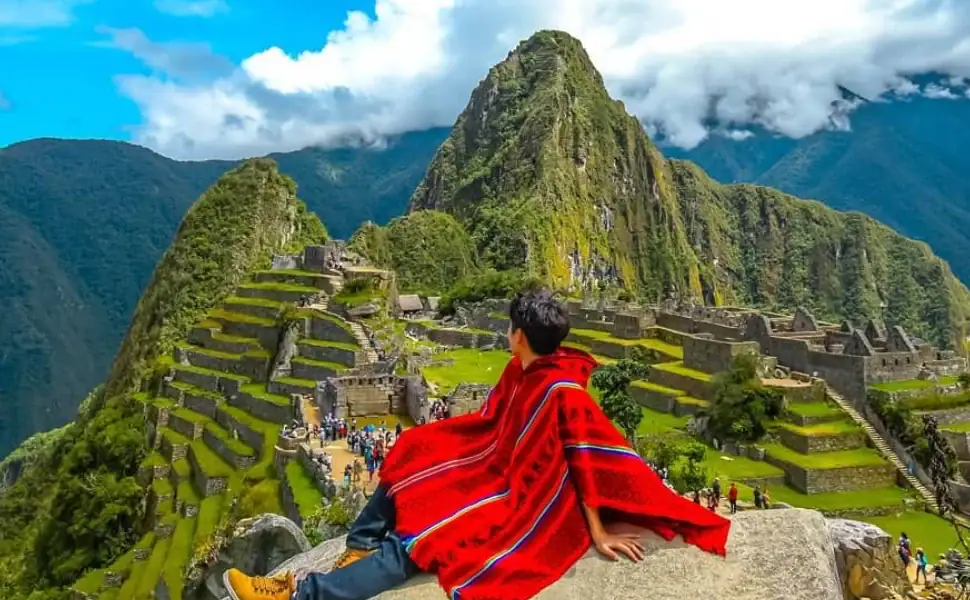
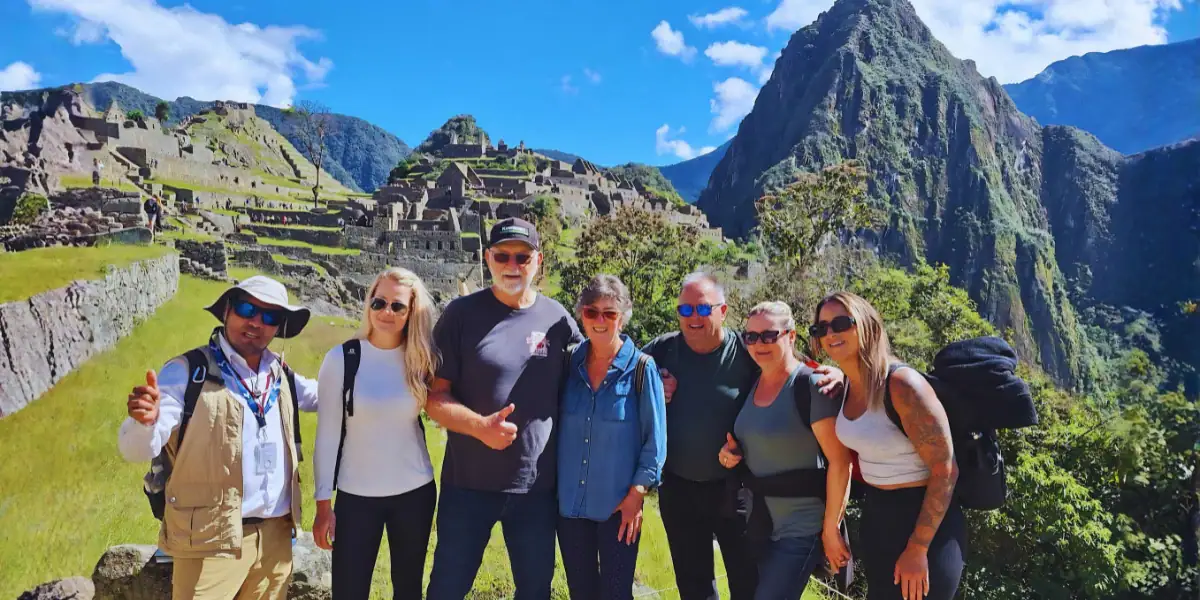
Machu Picchu at 2,430m (7,972 ft) is actually the lowest point of the classic Cusco circuit — and the one most seniors feel best at. The guided circuit follows paved, relatively flat paths through the citadel and takes about 2–2.5 hours with a bilingual guide. At the end, you have free time to explore at your own pace before descending by bus to Aguas Calientes town.
How to get to Machu Picchu without hiking
- Train from Ollantaytambo to Aguas Calientes. 90-minute scenic ride through the cloud forest in comfortable tourist-class carriages. Turismo Liberty includes round-trip train tickets in all Cusco packages.
- Bus from Aguas Calientes to the citadel entrance. 25-minute winding road through the jungle. Buses depart every 5–10 minutes from the town center — no need to pre-book separately.
- Guided circuit inside the citadel. The standard circuit covers the main agricultural terraces, the Temple of the Sun, the Intihuatana stone, and the Temple of the Three Windows. The guide explains as you walk at the group’s pace.
- Overnight in Aguas Calientes (recommended). Staying in Aguas Calientes the night before your Machu Picchu visit means you take the first bus up (6:00 AM) and avoid the midday crowds entirely. Turismo Liberty’s 5-day package includes this overnight.
⛔ Tours seniors over 60 should think twice about in Cusco
This is the section most guides skip — but it’s arguably the most important. Not because Cusco is dangerous for seniors, but because two specific tours carry a real risk of turning a great trip into an emergency. Turismo Liberty’s guides see altitude-related incidents most often on these two excursions.
🔴 Rainbow Mountain (Vinicunca) — not recommended for most 60+
Rainbow Mountain reaches 5,200m (17,060 ft) — well above the threshold where altitude sickness becomes dangerous without proper conditioning. The ascent involves 3–4 hours of strenuous walking at elevations where oxygen concentration is roughly 50% of sea level. Even fit travelers in their 30s sometimes need assistance on this route. For travelers over 60, the risk-reward ratio is unfavorable. The views are extraordinary, but they come at a cost that isn’t worth it for most senior travelers.
🔴 Humantay Lake — only after proper acclimatization
Humantay Lake at 4,200m involves a 2-hour uphill hike that many travelers find harder than expected, particularly in the thin air. It’s not off-limits for seniors — but it requires at least 3 nights of acclimatization in Cusco beforehand, good cardiovascular baseline, and no high blood pressure. If you want to attempt it, let Turismo Liberty know in advance so they can advise on the right timing within your itinerary. Our article on Cusco over 60 goes into further detail on preparation.