If you’re planning the Choquequirao trek in 2026, you’re looking at one of the last great Inca citadels still visited almost in solitude. The Choquequirao Trek 4 Days / 3 Nights with Turismo Liberty starts at $665 per person and includes a certified professional guide, all meals, camping equipment and entrance to the archaeological complex. If you already have your dates, message us on WhatsApp +51 959 175 901 and we’ll confirm spots in minutes.
Known as the “Lost City of the Incas” and the “sacred sister” of Machu Picchu for its similar architecture, Choquequirao receives only a fraction of the visitors that reach Peru’s most famous citadel every day — there’s no train, no bus, the only way in is on foot. This guide covers the day-by-day route, how difficult it really is compared to other Cusco treks, seasonal weather, what to pack, and the cable car project that could change all of this in the coming years.
🏛️ The Tour: Choquequirao Trek 4 Days 3 Nights
Here’s the essential snapshot of the tour as operated by Turismo Liberty:
| Detail | Information |
|---|---|
| Tour | Choquequirao Trek 4 Days / 3 Nights — The Hidden Inca City |
| Price | From $665 per person |
| Duration | 4 days / 3 nights |
| Starting point | Hotel pickup in Cusco |
| Group size | Up to 12 travelers |
| Maximum altitude | 3,600 m / 11,811 ft (Marampata campsite) |
| Difficulty level | Moderate to challenging |
| Best season | March to November |
| What’s included | Certified guide, trekking chef, tourist transportation, 3 breakfasts, 3 lunches and 3 dinners, private campsites with four-season tents, complete camping equipment, first-aid kit with oxygen, entrance tickets |
| What’s NOT included | Sleeping bag, trekking poles, breakfast on day 1, lunch and dinner on the last day |
🏔️ What Choquequirao Is and Why It’s Worth It in 2026
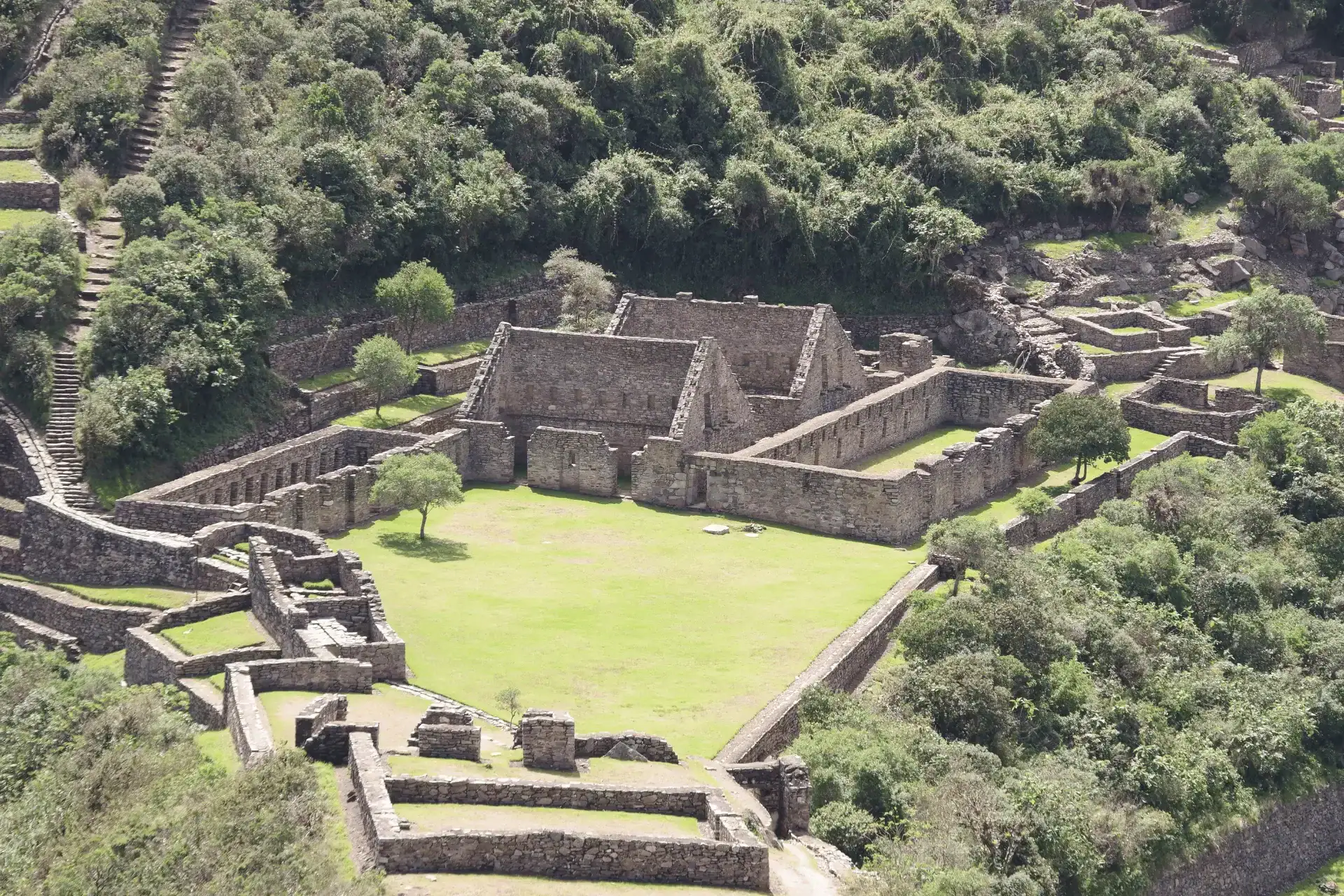
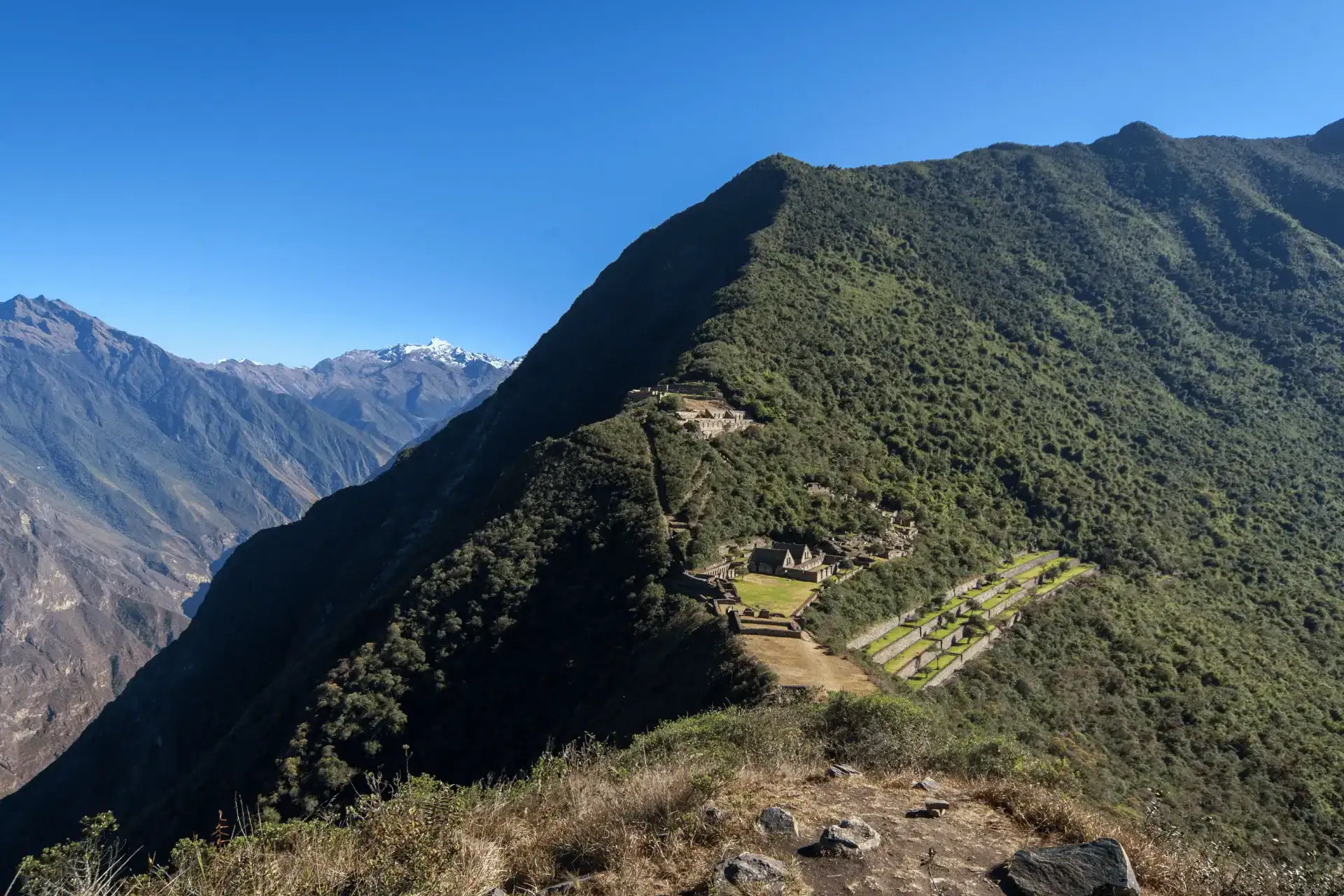
Choquequirao sits at over 3,030 meters above sea level, on the edge of the Apurimac River and within the Salkantay mountain range. It’s known as the “Last Refuge of the Inca Empire” for its architectural layout, agricultural terraces and advanced hydraulic system. Unlike Machu Picchu, only about 30% to 40% of the complex has been excavated — much of it remains covered by cloud-forest vegetation.
One of the most photographed sections is the famous llama terrace: a series of agricultural terraces decorated with white stone mosaics forming llama figures, a unique expression of Inca iconography found nowhere else in Peru.
🗺️ Day-by-Day Itinerary: Choquequirao Trek 4 Days
This is Turismo Liberty’s standard program. The evening before the trek starts, there’s a mandatory briefing at 6:00 PM at the office, where the route is explained and the duffel bag carried by pack horses is handed out.
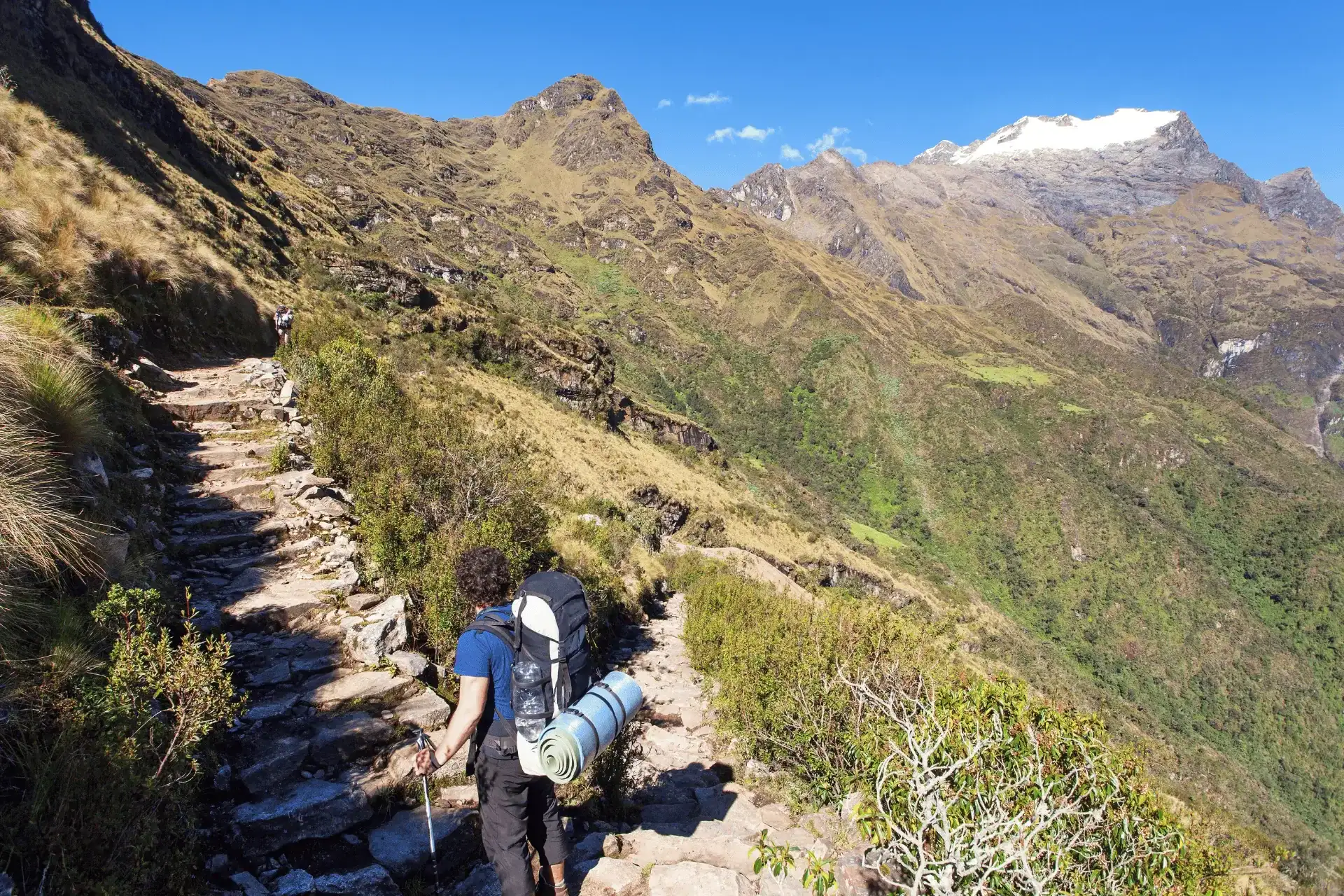
- Day 1 — Cusco → Capuliyoc → Santa Rosa Baja (7 hours, 17 km): Hotel pickup and a 3.5-hour transfer to San Pedro de Cachora (2,800 m). From there, by vehicle to Capuliyoc, where the hike begins with views of the Padreyoc snow-capped peak and the Apurimac Canyon. Descent to Chiquisca for lunch, then on to the Santa Rosa Baja campsite (1,950 m).
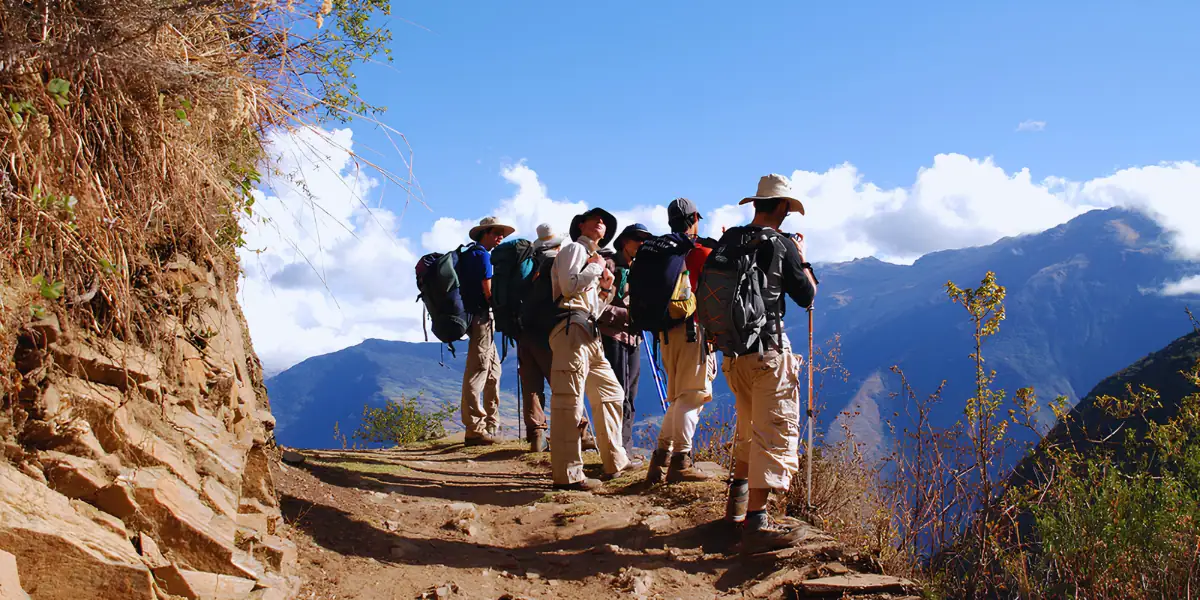
- Day 2 — Santa Rosa Baja → Marampata → Choquequirao (8 hours, 9 km): A 3.5-hour ascent to Marampata (3,600 m), considered one of the most demanding sections of the trek. After a short rest, a guided visit to the Choquequirao archaeological complex: the main plaza, the ceremonial area, the agricultural terraces and the famous llama terrace. Return and overnight in Marampata.
- Day 3 — Marampata → Chiquisca, return through the Apurimac Canyon (5-6 hours, 18 km): A roughly 5-hour descent to Playa Rosalina, near the Apurimac River. Then, a 1.5-hour ascent to the Chiquisca campsite (1,850 m), where lunch is served and there’s free time to rest before the final day’s hike.
- Day 4 — Chiquisca → Capuliyoc → Cachora → return to Cusco (5-6 hours, 10 km): A very early departure around 5:00 AM for the final 4-hour ascent to Capuliyoc (2,900 m), the highest point of the day. A farewell lunch with the expedition crew and a 3-hour transfer back to Cusco, arriving around 6:00 PM.
⚖️ How Difficult Choquequirao Is Compared to Other Treks
Choquequirao, Salkantay and the Inca Trail are all officially classified as “moderate to challenging,” but the type of effort each demands is different:
| Trek | Total distance | Main challenge | Hardest moment |
|---|---|---|---|
| Choquequirao | ~54 km with steep elevation changes | Cumulative elevation change on the legs | Day 2: 3.5-hour ascent from 1,950 m to 3,600 m |
| Salkantay | ~58 km over 3 hiking days | Extreme altitude (4,630 m) | Day 2: crossing the glacial pass |
| Inca Trail | ~37 km over 3 hiking days | Altitude + pre-dawn departure | Day 4: night ascent to the Sun Gate |
The key difference: on Salkantay and the Inca Trail the main challenge is altitude, while on Choquequirao it’s repeated elevation change — dropping to 1,850 m and climbing back up almost 2,000 m, twice during the full route. That’s why many mountain guides in Cusco consider Choquequirao the physically most exhausting of the three, even though its maximum altitude (3,600 m) is lower than its alternatives.
🚡 The Choquequirao Cable Car Project: What It Means for Your Trip
The Peruvian government, through ProInversión and Mincetur, is advancing a cable car project under a Public-Private Partnership model that would reduce access to Choquequirao from more than 2 days of hiking to just 20 minutes. The projected investment is approximately $261 million, and the stated goal is to increase annual visitors from about 10,000 to over one million.
The project involves a more than 10-kilometer (6.2 mi) aerial route between the towns of Kiuñalla (Apurimac) and Yanama (Cusco), with swaying-type cabins and a capacity of 400 people per hour. However, the initiative has been postponed multiple times since it was first proposed in 2011 due to technical, legal, environmental and social factors, and remains in the award-process stage under the Public-Private Partnership model, with no confirmed construction date.
🌤️ Weather and Best Time for the Choquequirao Trek
The dry season, from March to November, is recommended for the trek, with the best weather between May and September:
| Period | Conditions | Recommendation |
|---|---|---|
| May – September | 🟢 Dry, clear skies, cold nights at Marampata | ✅ The best window of the year |
| March – April / October – November | 🟢 Good weather, season transition | ✅ Recommended, lower demand |
| December – February | 🟡 Rainy season, more slippery trails | ⚠️ The trek operates with extra caution |
🎒 What to Pack for the Choquequirao Trek
Camping and cooking equipment is included. Here’s what you should prepare yourself:
- Sleeping bag (-5°C to -10°C rated) — not included; easily rented in Cusco
- Trekking poles — highly recommended for the canyon’s steep descents
- Already broken-in trekking boots — never wear brand-new shoes right before a 4-day hike
- Layered clothing — heat at the bottom of the canyon during the day, intense cold at night in Marampata
- Sunscreen, hat and UV sunglasses — high-altitude radiation burns much faster
- Insect repellent — especially for the lower sections of the canyon
- Reusable water bottle — boiled water is included from the first lunch onward
- Cash in soles — for tipping the muleteer and guide crew
- Headlamp — essential for the pre-dawn departure on day 4
💰 Price and What’s Included in the Choquequirao Trek
With Turismo Liberty, the Choquequirao Trek 4 Days / 3 Nights is booked directly, with no middlemen or platform commissions:
| Includes | Not included |
|---|---|
| Certified professional guide (Spanish-English) | Sleeping bag |
| Trekking chef and assistant | Trekking poles |
| 3 breakfasts, 3 lunches and 3 dinners, with vegetarian option | Breakfast on day 1 |
| Boiled water from the first lunch to the last breakfast | Lunch and dinner on the last day |
| Private tourist transportation Cusco – Capuliyoc – Cusco | Personal clothing and gear |
| Private campsites in Santa Rosa, Marampata and Chiquisca | Travel insurance |
| Complete camping equipment and basic hygiene supplies | Tips for guide, cook and muleteers |
| First-aid kit and oxygen supply | — |
| Trekking route and archaeological complex entrance tickets | — |
| Personal duffel bag (up to 7 kg) carried by pack horses | — |
📋 How to Book the Choquequirao Trek
Booking the Choquequirao Trek with Turismo Liberty takes less than 5 minutes:
- Message WhatsApp at +51 959 175 901 stating your date, group size, and any questions about your fitness level.
- Receive availability confirmation and current pricing within minutes.
- Confirm with a deposit payment — bank transfer, card or PayPal.
- Attend the informational briefing the evening before the trek, at 6:00 PM at the Cusco office, where you’ll receive your duffel bag and the full route explanation.
- On the day of the trek, the team picks you up at your hotel at the coordinated time.
❓ Frequently Asked Questions — Choquequirao Guide 2026
The Choquequirao Trek 4 Days / 3 Nights with Turismo Liberty starts at $665 per person. It includes a certified professional guide, all meals prepared by a trekking chef, tourist transportation, complete camping equipment, a first-aid kit with oxygen, and entrance to the archaeological complex. It does not include a sleeping bag, trekking poles, breakfast on day 1, or lunch and dinner on the last day.
It’s classified as moderate to challenging, and many mountain guides consider it the physically most exhausting trek in Cusco because of its cumulative elevation change: you descend to 1,850 m on day one and climb almost 2,000 m the next day to reach the citadel, repeating that same pattern on the way back. Prior trekking experience isn’t mandatory, but good physical fitness is.
The trek departs from Cusco with hotel pickup in private tourist transportation. The journey takes about 3.5 hours to San Pedro de Cachora (2,800 m), then continues by vehicle to Capuliyoc, where the hike begins.
The Choquequirao cable car project, with an estimated investment of $261 million, aims to reduce access from more than 2 days of hiking to just 20 minutes, increasing visitor capacity from about 10,000 to over one million per year. The project remains in the award-process stage under the Public-Private Partnership model with no confirmed construction date, so 2026 remains a window to experience the site in its current state, without Machu Picchu-level crowds.
Yes, according to most mountain guides in Cusco. Salkantay and the Inca Trail demand more from altitude (4,630 m and 4,215 m respectively), but they ascend and descend more gradually. Choquequirao never exceeds 3,600 m, but its cumulative elevation change on the legs — dropping and climbing nearly 2,000 m twice during the trek — makes it, for many, the most physically exhausting of the three.
The dry season, from March to November, with the best weather between May and September. Outside that window, the rainy season (December to March) can make the canyon trails more slippery, though the trek continues to operate with extra caution during those months.
Choquequirao offers something already hard to find in Cusco: a Machu Picchu-sized Inca citadel, with equally impressive architecture and terraces, but explored by a fraction of the visitors. With the cable car project still in the award-process stage, 2026 remains a real window to experience it in its most authentic form. Turismo Liberty runs the trek with certified guides, complete camping equipment and all meals included from $665 per person.
Ready for your Choquequirao trek?
From $665 per person · Certified guide, all meals and camping equipment included · Groups capped at 12 travelers · Reply within minutes on WhatsApp.